
ORCHARD CREST JOURNAL
The World of Raisins: Green, Golden, Brown & Beyond
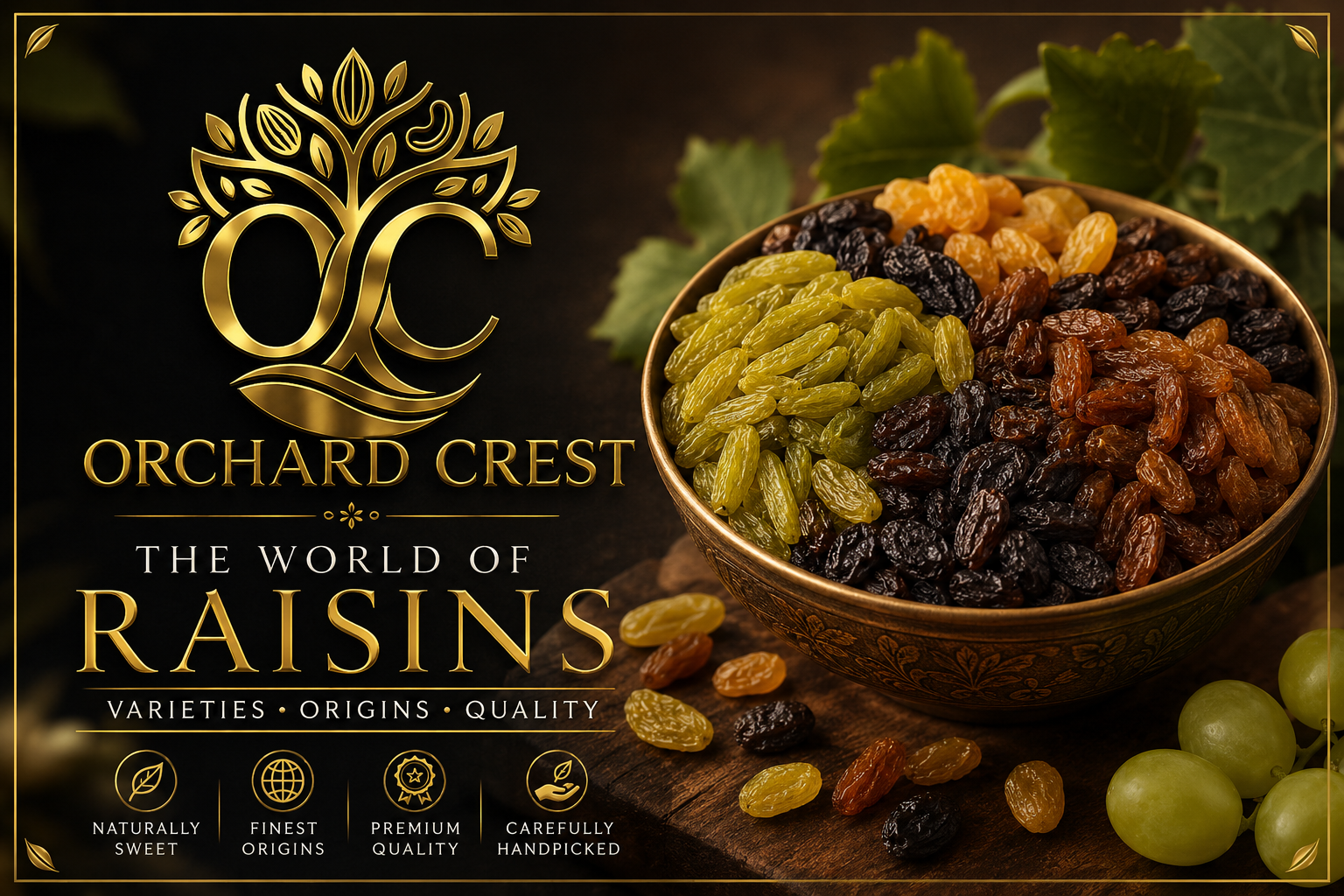
The World of Raisins: Green, Golden, Brown & Beyond
Raisins may look like a simple dried fruit, but there is a fascinating world behind every variety.
From long, elegant green raisins to plump golden raisins and naturally dark brown raisins,
each type can differ in grape variety, growing region, drying method, texture and flavour.
If you’ve ever wondered why some raisins are green while others are brown or golden,
why some are long while others are round, or how to identify genuinely
premium quality raisins, this guide will help you understand what really matters.
At ORCHARD CREST, we believe that knowing your dry fruits makes enjoying them even better.
Not All Raisins Are Created Equal
Raisins are essentially dried grapes, but the final character of a raisin depends on much more than
simply drying the fruit.
The grape variety, growing region, climate, maturity, harvesting practices and drying method
all influence the colour, shape, sweetness and texture of the finished raisin.
This is why two raisins can look completely different while both being excellent quality.
The grape creates the character. The region shapes the flavour.
The drying process creates the texture. And careful selection defines the quality.
Green Raisins: Long, Elegant & Naturally Sweet
Among the most visually distinctive varieties are green raisins,
widely known as green kishmish in India.
Their colour can range from pale green and yellow-green to olive green,
depending on the grape variety, maturity and processing method.
Premium green raisins are often appreciated for their:
- Long and slender appearance
- Attractive natural green colour
- Soft and slightly chewy texture
- Natural sweetness
- Pleasant fruity aroma
Their elegant appearance also makes them particularly popular for
premium dry-fruit gifting.
How to Choose Premium Green Raisins
Don’t simply choose the brightest green raisin. Instead, look for
clean, well-developed berries with a natural colour, pleasant aroma
and soft but firm texture.
A beautiful green colour is attractive, but freshness and flavour
are what truly make a raisin worth eating.
Brown Raisins: The Classic Favourite
Brown raisins are among the most familiar types of raisins enjoyed around the world.
They are commonly produced by drying grapes naturally, allowing the fruit to develop
its characteristic brown colour.
A good natural brown raisin should be soft, fruity, naturally sweet
and pleasantly chewy.
Premium brown raisins should have a clean appearance and a pleasant fruity aroma,
without musty, fermented or stale notes.
Their colour may range from light brown to deep brown depending on the grape variety
and drying process.
Remember: darker does not automatically mean better.
The appropriate colour depends on the variety and processing method.
Golden Raisins: Bright, Soft & Distinctive
Golden raisins stand apart because of their attractive
yellow-golden to amber appearance.
They are commonly appreciated for their:
- Bright appearance
- Soft texture
- Sweet flavour
- Attractive presentation
- Versatility in baking and desserts
Golden raisins can be produced using controlled drying and processing methods
that help retain their lighter colour.
Therefore, don’t judge golden raisins by colour alone.
Variety, processing, freshness and flavour should all be considered.
Sultana Raisins: Small Berry, Big Character
Sultana raisins are traditionally associated with seedless grapes
and are particularly important in regions such as the Aegean region of Turkey.
They are generally known for being:
- Seedless
- Soft
- Tender
- Naturally sweet
- Light brown to amber in appearance
Sultanas are particularly popular in baking, confectionery and desserts,
where their soft texture and sweetness complement other ingredients.
California Raisins: A Classic Raisin Origin
California is one of the world’s best-known raisin-producing regions,
particularly the Central San Joaquin Valley.
The region is strongly associated with seedless raisin grapes,
especially Thompson Seedless.
California raisins are valued for their:
- Consistent quality
- Natural sweetness
- Fruity flavour
- Versatility
- Wide range of culinary uses
They are commonly enjoyed in breakfast cereals, bakery products,
trail mixes and everyday snacking.
Indian Raisins: From Vineyard to Kishmish
India has a rich grape-growing and raisin-producing tradition, particularly
in Maharashtra.
Important grape-growing areas include Nashik, Sangli, Solapur and Pune.
Indian raisins can vary considerably in colour, size, shape,
sweetness and texture.
Sangli raisins have a distinct regional identity and are
an important part of India’s raisin trade.
This diversity means that “Indian raisin” is not one single type.
The grape variety and processing method matter just as much as the region.
Long Raisins vs Round Raisins
Long Raisins
Long, slender raisins are particularly popular in premium green raisin selections.
Their elegant appearance makes them especially attractive for premium presentation
and gifting.
Often preferred for:
- Premium snacking
- Dry-fruit gifting
- Dry-fruit platters
- Premium mixes
Round Raisins
Round or plumper raisins offer a different visual and eating experience.
They are commonly used in baking, desserts, breakfast foods and everyday snacking.
Often preferred for:
- Baking
- Desserts
- Breakfasts
- Trail mixes
- Everyday snacking
Long does not mean better, and round does not mean inferior.
Shape is largely a characteristic of the grape variety and processing method,
rather than a universal measure of quality.
What Does a Premium Raisin Actually Look Like?
Forget the word “premium” printed on the packet for a moment.
Pick up the raisin. Look at it. Feel it. Smell it. Taste it.
That’s where the real test begins.
1. Look for a Healthy Appearance
Premium raisins should generally be clean, well-developed and appropriate
for their variety.
- Clean surface
- No visible mould
- No insect damage
- Minimal foreign material
- Natural-looking colour
- Minimal excessive shrivelling
Some natural wrinkling is completely normal.
A raisin is a dried grape—not a polished confection.
2. Look at the Colour—But Don’t Stop There
- Green: green to yellow-green
- Golden: yellow-gold to amber
- Brown: natural brown to deep brown
- Dark: deep brown to black
The brightest raisin isn’t necessarily the best raisin.
Natural colour, good flavour and freshness are much better
indicators of overall quality.
3. Give It the Aroma Test
Fresh raisins should have a pleasant, fruity and naturally sweet aroma.
Be cautious if you notice musty, sour, fermented, chemical-like
or stale smells.
A premium raisin should smell inviting before it even reaches your palate.
4. Feel the Texture
Take one between your fingers. A good raisin should generally feel
pliable and pleasantly soft, depending on its variety.
Avoid raisins that feel:
- Excessively wet
- Unusually sticky
- Slimy
- Rock-hard
- Excessively brittle
5. Taste the Difference
A quality raisin should deliver:
Natural sweetness → fruity flavour →
pleasant chewiness → clean finish
If the flavour is stale, fermented, excessively bitter or rancid,
it may indicate deterioration or poor storage.
At ORCHARD CREST, this is the moment that matters most.
Beautiful raisins are nice. Delicious raisins are better.
The ORCHARD CREST Hand-Picking Guide
If you’re selecting raisins from a loose lot, don’t simply grab the
biggest or brightest ones.
LOOK
Are the raisins clean, intact and properly developed?
COLOUR
Does the colour look natural and appropriate for the variety?
SHAPE
Are they long, round or plump—and is that shape appropriate for the type?
FEEL
Are they soft and pliable without being excessively wet or sticky?
AROMA
Do they have a clean, fruity and naturally sweet smell?
TASTE
Do they deliver clean, natural sweetness with a pleasant fruity flavour?
When all six checks come together, you’re much closer to a genuinely
good-quality raisin.
Which Raisin Should You Choose?
There is no single “best raisin” for everyone. The right choice depends
on your taste and how you plan to enjoy it.
| Your Preference | Raisin Type to Consider |
|---|---|
| Elegant appearance | Long Green Raisins |
| Natural sweetness | Brown Raisins |
| Bright and soft fruit | Golden Raisins |
| Soft, tender texture | Sultanas |
| Classic everyday raisin | California Raisins |
| Regional Indian varieties | Maharashtra Raisins |
| Baking and desserts | Sultanas & Brown Raisins |
| Premium gifting | Long Green & carefully selected Golden Raisins |
A Simple Rule for Buying Premium Raisins
When choosing raisins, remember these six words:
Origin. Variety. Colour. Texture. Aroma. Taste.
Don’t choose solely because a raisin is green, large, long,
dark or golden.
Choose it because those characteristics are appropriate for the variety
and because the fruit is fresh, clean and delicious.
The ORCHARD CREST Difference
At ORCHARD CREST, we see dry fruits differently.
A raisin isn’t just a sweet dried fruit.
It is the result of a journey—from
vineyard to harvest, from grape to raisin, and finally from
careful selection to your table.
That’s why we look beyond simple labels such as premium,
jumbo or extra quality.
We believe real quality is found in:
- Well-selected fruit
- Recognizable character
- Good colour
- Fresh aroma
- Pleasant texture
- Natural sweetness
- Careful handling
Because when it comes to premium dry fruits,
the smallest details can make the biggest difference.
ORCHARD CREST
Curated Dry Fruits. Exceptional Gifting.